If you've ever stood in a dealership showroom, you've seen one: a sheet of paper stuck to a car window, packed with numbers, checkboxes, and a price at the bottom. Most people just call it a car window sticker. Fewer know its actual name — a Monroney label — or realize how much useful information is packed into that one page.
This guide breaks down what a car window sticker actually is, what's printed on it, and why it matters well beyond the day a car is new — whether you're buying a used vehicle, selling one, or just trying to figure out what you're really looking at.
What Is a Car Window Sticker?
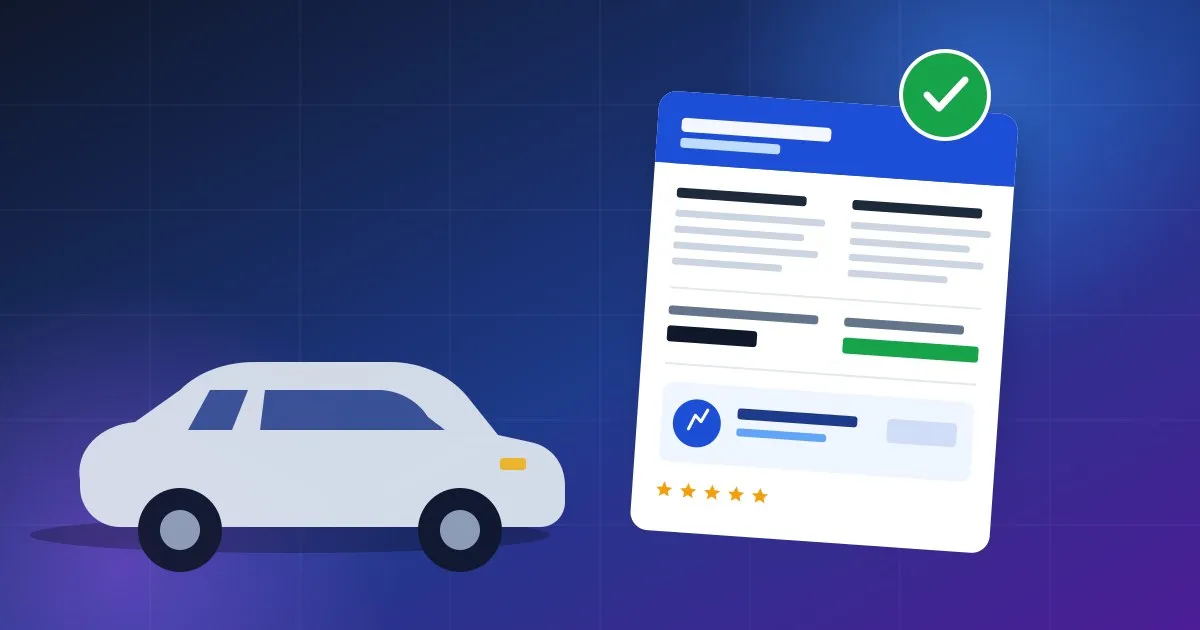
A car window sticker is the factory-issued document that discloses a new vehicle's exact specifications, features, and price before it's sold. Federal law has required one on every new car sold in the United States since 1958, under the Automobile Information Disclosure Act. The official name is a Monroney label, named after the Oklahoma senator who sponsored the law — but "window sticker" is what almost everyone actually calls it.
It's not a decal, and it's not something you can order in different designs — it's a standardized federal disclosure form, and altering or removing one before a new car is sold is illegal. Once the car is sold, the physical sticker usually gets tossed, recycled, or lost in a glovebox somewhere. That's the whole reason a window sticker lookup by VIN exists: to recreate that exact original document years later, using nothing but the vehicle's VIN.
What Information Is Actually on a Window Sticker?
Every window sticker follows roughly the same layout, regardless of manufacturer. Here's what you'll find on it:
- Vehicle description — year, make, model, trim, and the full VIN
- Standard equipment — everything included in the base price, broken out by category (safety, powertrain, interior, exterior)
- Optional equipment — every factory-installed option, each itemized with its own price
- Pricing — base MSRP, total of all options, destination and delivery charge, and the final total price
- EPA fuel economy — city, highway, and combined MPG (or MPGe for electric and hybrid vehicles), plus estimated annual fuel cost
- Safety ratings — NHTSA crash-test scores, when available for that model
- Manufacturing details — the plant where the vehicle was assembled and its country of origin percentage
That combination is what makes it more useful than almost any other single vehicle document. A title tells you who owns the car legally. A Carfax tells you what's happened to it since it was sold. A window sticker is the only one that tells you exactly how the car was built and what it cost brand new — see our breakdowns of window sticker vs. title and window sticker vs. Carfax if you want the full comparison.
Why It Matters When You're Buying
If you're shopping for a used car, the window sticker is the closest thing to a factory receipt. Two vehicles of the same year, make, and model can be worth meaningfully different amounts depending on what options they actually left the factory with — a sunroof, a tow package, a specific trim level, or an upgraded audio system aren't always obvious from photos or even from sitting in the car.
It's also a reliable way to catch a mismatch between what a listing claims and what a vehicle actually has. If a seller advertises a "loaded" trim but the window sticker shows a base configuration, that's worth knowing before you make an offer, not after.
Why It Matters When You're Selling
On the flip side, having the original window sticker on hand when you sell is one of the simplest ways to justify your asking price. Instead of just telling a buyer "it has the premium package," you can show them the factory documentation — original MSRP, every option, and the exact configuration, all in one page that a buyer can't dispute.
Dealers rely on this same logic constantly; it's a big part of how dealers use window stickers to build buyer confidence and support pricing. Private sellers can use the exact same document to do the same thing.
How to Get a Window Sticker for a Specific Car
If the physical sticker is long gone — which is true for the vast majority of used cars — you don't need to track down the original dealership or hope someone kept the paperwork. A window sticker can be regenerated from the vehicle's VIN alone, since the VIN encodes exactly which factory options a car was built with.
We cover the full process, including what's free and what isn't, in our guide on how to get a window sticker by VIN. If you already have a VIN ready, you can also jump straight to generating your factory-correct window sticker — it takes a few minutes, delivered as a PDF.
Frequently Asked Questions (FAQ)
Is a car window sticker the same as a Monroney label?
Yes. "Window sticker," "Monroney label," and "Monroney sticker" all refer to the exact same federally mandated document — window sticker is just the common name, while Monroney label is the official legal term.
Do window stickers exist for used cars, or only new ones?
Window stickers are only physically attached to new cars at the point of sale. For a used car, the original information still exists on record and can be regenerated by VIN — the vehicle's specifications don't change just because it's changed hands.
Can a window sticker tell me if a car has been in an accident?
No. A window sticker only documents the vehicle's original factory build and MSRP — it has nothing to do with accident history, title status, or ownership records. For that, you'd need a vehicle history report instead.
Does every car brand's window sticker look the same?
The core information is standardized by federal law, but the exact layout varies by manufacturer. Some brands add extra sections for technology packages or brand-specific ratings, but MSRP, standard equipment, options, and EPA fuel economy are required on every one, regardless of brand.
The Bottom Line
A car window sticker is a small piece of paper that carries an outsized amount of useful information — original price, every factory option, fuel economy, and safety data, all in one standardized document. Whether you're comparing your options before a purchase or trying to prove what your car is actually worth before you sell it, it's one of the most underused tools available to both buyers and sellers.
Ready to see what's on yours? Look up your factory-correct window sticker by VIN and get an instant PDF.