If you've ever purchased a new car, you've seen a Monroney label—even if you didn't know what it was called, or that "window sticker" and "Monroney sticker" both refer to the exact same document. This comprehensive guide explains everything you need to know: what's legally required on it, how to read every section, and how it differs from documents people often confuse it with.
What is a Monroney Label?
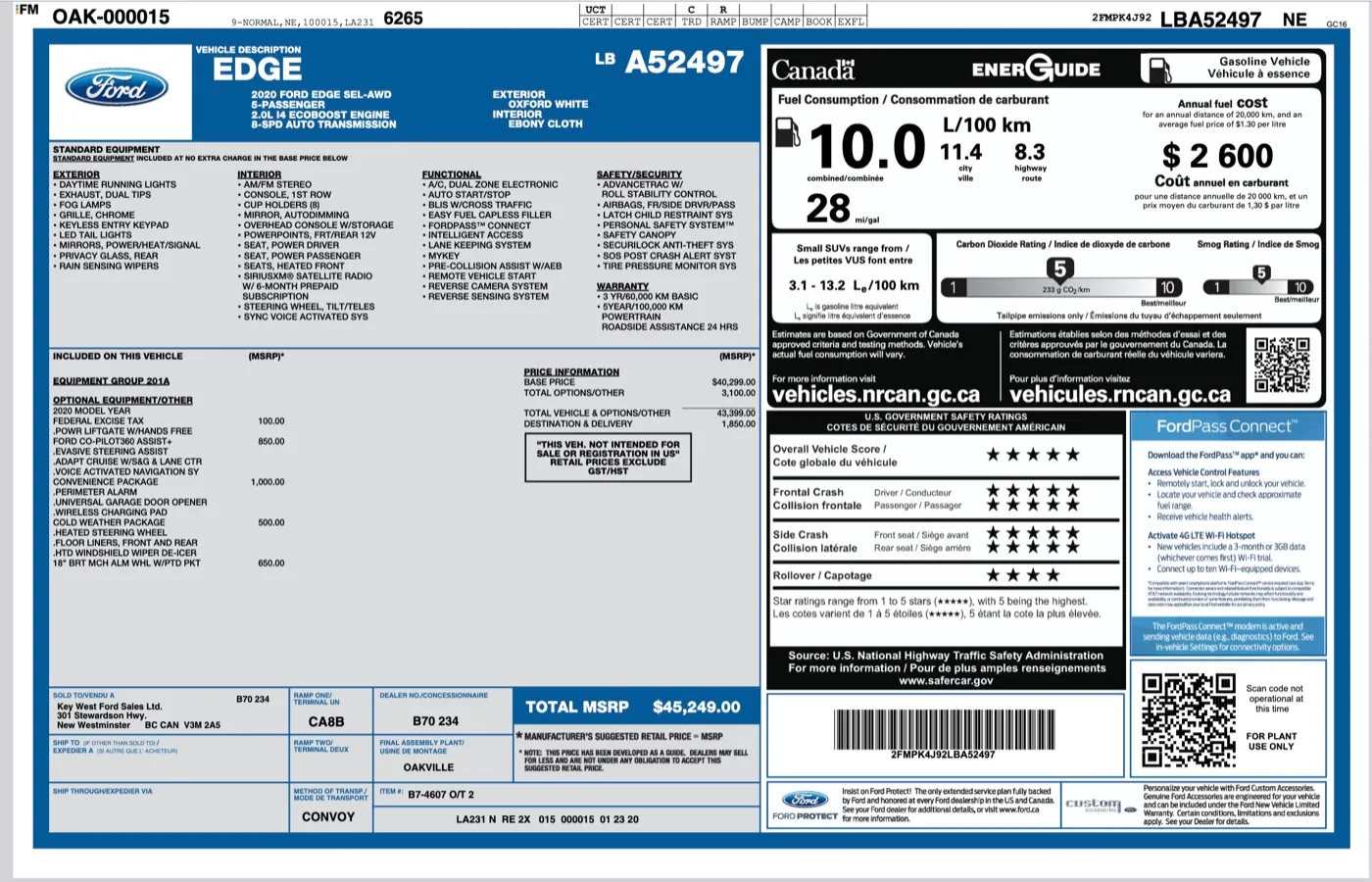
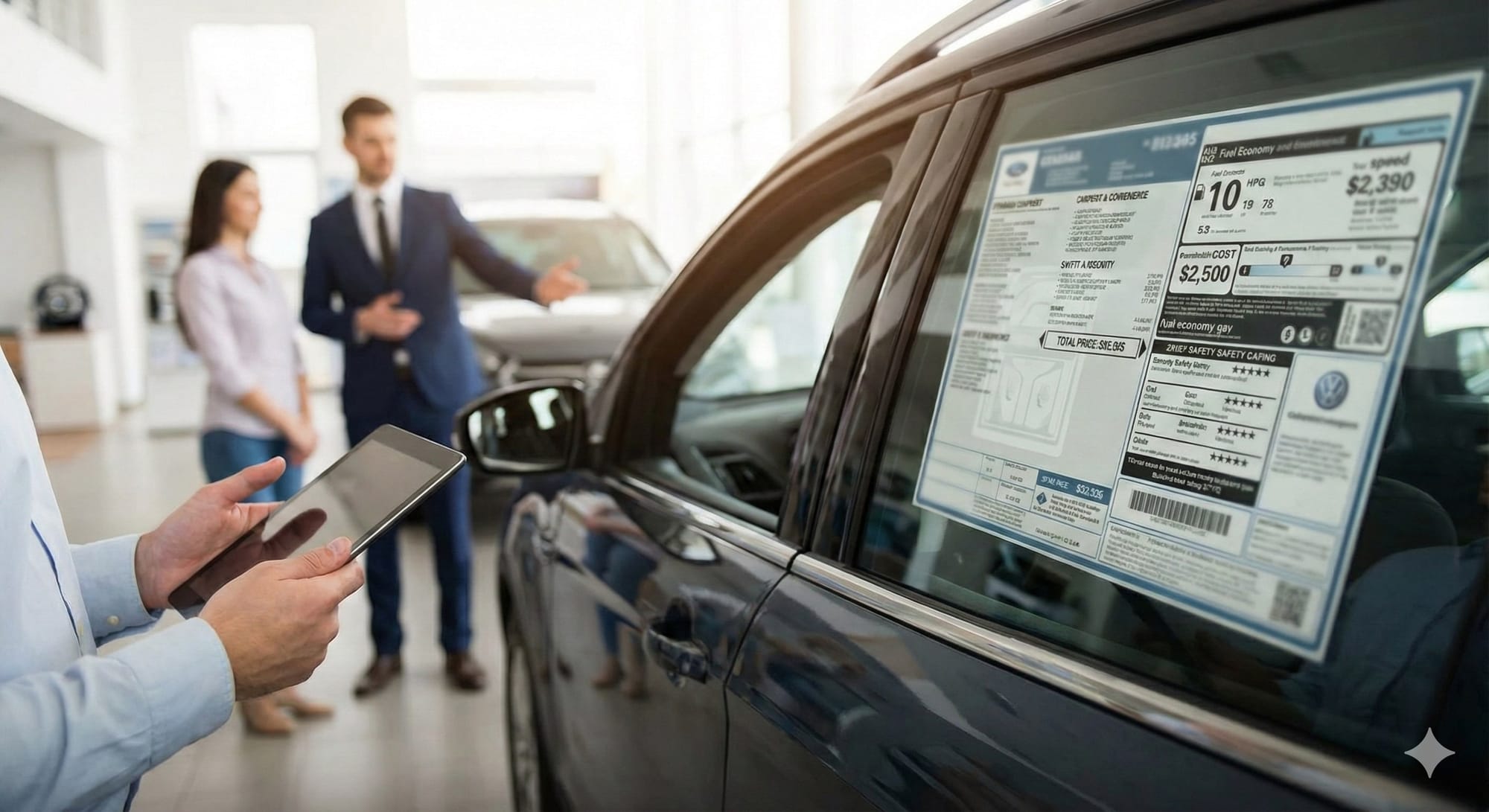
A Monroney label, also called a Monroney sticker or window sticker, is the document that displays a vehicle's specifications, features, fuel economy ratings, and manufacturer's suggested retail price (MSRP). It's named after U.S. Senator A.S. "Mike" Monroney of Oklahoma, who sponsored the Automobile Information Disclosure Act of 1958 (codified at 15 U.S.C. §§ 1231–1233). The Act requires every new vehicle sold in the United States to display this label before sale — it cannot legally be removed or altered by a dealer.
Why Was the Monroney Label Created?
Before 1958, car buyers had no standardized way to compare vehicles or verify what they were paying for. Dealers could mark up prices arbitrarily, and consumers had little transparency into a vehicle's actual features and specifications. Senator Monroney recognized this problem and championed legislation to protect car buyers.
The Automobile Information Disclosure Act mandated that all new cars display a label with standardized information, giving consumers the power to make informed decisions and compare vehicles fairly. Today, the Monroney label remains one of the most important consumer protection tools in the automotive industry.
What Information is on a Monroney Label?
Every Monroney label contains detailed information about the vehicle, organized into several key sections:
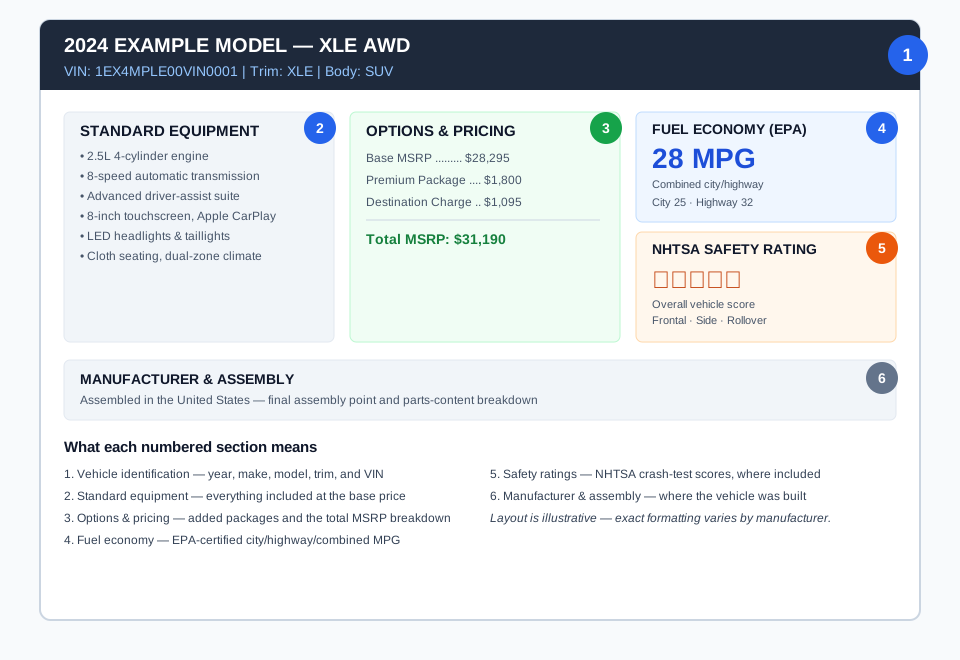
1. Vehicle Identification
- VIN (Vehicle Identification Number): The unique 17-character code that identifies your specific vehicle
- Make, Model, and Year: The manufacturer, model name, and model year
- Trim Level: The specific version or package (e.g., LX, Sport, Limited)
2. Standard Equipment
This section lists all features that come standard with the vehicle at the base price, including:
- Engine specifications (size, type, horsepower)
- Transmission type (automatic, manual, CVT)
- Safety features (airbags, stability control, backup camera)
- Interior features (seating capacity, audio system, climate control)
- Exterior features (wheels, lighting, paint)
3. Optional Equipment and Packages
Any additional features or packages added to the vehicle beyond the standard equipment, along with their individual prices. This might include:
- Premium audio systems
- Navigation systems
- Leather seats or upgraded interior materials
- Advanced safety packages
- Performance upgrades
4. Fuel Economy Ratings
EPA-certified fuel economy estimates showing:
- City MPG: Estimated miles per gallon in city driving
- Highway MPG: Estimated miles per gallon on highways
- Combined MPG: Overall fuel economy estimate
- Annual Fuel Cost: Estimated yearly fuel expenses
5. Pricing Information
- Base MSRP: Manufacturer's suggested retail price for the base model
- Options Total: Combined cost of all optional equipment
- Destination Charge: Fee for shipping the vehicle to the dealer
- Total MSRP: Complete manufacturer's suggested retail price
6. Safety Ratings
Many modern Monroney labels include safety ratings from the National Highway Traffic Safety Administration (NHTSA), showing crash test results and overall safety scores.
Why Do You Need a Monroney Label?
While Monroney labels are required on new vehicles, they're also incredibly valuable for used car transactions:
For Sellers
- Justify Your Asking Price: Show buyers the original MSRP and all factory-installed options
- Build Trust: Provide factory-correct documentation of your vehicle's specifications
- Stand Out from Competition: Professional listings with window stickers sell faster
- Prove Equipment: Verify that advertised features were factory-installed
For Buyers
- Verify Specifications: Confirm the vehicle has the features the seller claims
- Check Original Price: Understand the vehicle's original value and depreciation
- Compare Options: See exactly what equipment was included from the factory
- Avoid Fraud: Detect misrepresented vehicles or odometer fraud
How to Get a Monroney Label for Your Vehicle
If you've lost your original window sticker or purchased a used vehicle without one, you have several options:
1. Contact the Manufacturer
Most manufacturers offer window sticker retrieval services through their customer service departments. You'll need your VIN and may need to wait several days for processing.
2. Visit the Dealership
Authorized dealerships can sometimes access window sticker information through their dealer systems, though this service varies by manufacturer and may not be available for older vehicles.
3. Use an Online Service (Fastest Option)
Services like Monroney Decals provide instant access to a factory-correct Monroney sticker by VIN. Simply enter your 17-character VIN, and you'll receive a high-quality PDF within minutes—perfect for printing or including in online listings. To learn more about the process, read our step-by-step guide on getting a window sticker by VIN.
Monroney Label vs. Window Sticker: What's the Difference?
There's no difference—these terms are used interchangeably. "Monroney label" is the legal name, while "window sticker" is the common term used by consumers and dealers. Both refer to the same document. For more information about vehicle documents, check out our guide on the difference between window stickers and vehicle titles.
Monroney Label vs. Buyers Guide Sticker: Don't Confuse These
These two stickers are commonly mixed up, but they're legally distinct documents from different agencies:
- Monroney label: Required on new vehicles under the Automobile Information Disclosure Act. Discloses factory specs, options, and original MSRP. Issued by the manufacturer.
- Buyers Guide sticker: Required on used vehicles sold by dealers, under the FTC's Used Car Rule (16 CFR Part 455). Discloses whether the vehicle is sold "as-is" or with a warranty — it says nothing about specifications, options, or original price.
If you're buying a used car, you may see both: a Buyers Guide sticker from the current dealer, and (if you can find one) the original Monroney window sticker documenting how the vehicle was actually built. They answer completely different questions and neither substitutes for the other.
Are Monroney Labels Required for Used Cars?
Federal law only requires Monroney labels on new vehicles. However, having a window sticker for a used car provides significant advantages in the selling process and helps establish transparency and trust with potential buyers.
Can Monroney Labels Be Altered?
Altering a Monroney label is illegal under federal law. The label must accurately reflect the vehicle's specifications and pricing as determined by the manufacturer. Any modifications or false information can result in significant penalties.
Frequently Asked Questions
How do you pronounce "Monroney"?
It's pronounced mun-ROH-nee (rhymes with "baloney"). It's a common enough mix-up that plenty of people search for "Mulroney label" instead — see the next question.
How much does a Monroney label cost?
For a new vehicle, there's no separate cost — it's included by law when you buy from a dealer. For a used vehicle or a replacement copy, expect to pay $12.99–$20 through an online lookup service like Monroney Decals, versus free to $20+ (and several days) if a manufacturer or dealer can pull it for you at all.
Is "Monroney" a brand name or a person's name?
Neither, exactly — it's named after U.S. Senator A.S. "Mike" Monroney of Oklahoma, who sponsored the Automobile Information Disclosure Act of 1958 (15 U.S.C. §§ 1231–1233). The label itself has no connection to any car brand.
Is a Monroney label the same as a Buyers Guide sticker?
No — they're easily confused but legally distinct. A Monroney label is required on new vehicles and discloses factory specs, options, and MSRP. A Buyers Guide sticker is a separate FTC-mandated disclosure (16 CFR Part 455) required on used vehicles sold by dealers, covering warranty terms — not specifications or original price.
How long is a Monroney sticker valid, or does it expire?
It doesn't expire. The window sticker reflects the vehicle's factory configuration permanently — that information never changes, even decades later, which is why a window sticker generated from a VIN today is just as accurate as the original.
Is "Mulroney label" the same thing?
"Mulroney label" is simply a common misspelling of "Monroney label" (they're pronounced similarly). Same document, same information — just spelled differently.
Is it illegal to remove a Monroney label from a new car?
Yes, for dealers — federal law prohibits removing or altering a Monroney label before a new vehicle's sale. Once you own the vehicle, you're free to remove the physical sticker, though many owners keep or replace it since it documents the original factory build.
Conclusion
The Monroney label is more than just a piece of paper—it's a comprehensive record of your vehicle's specifications, features, and original value. Whether you're buying or selling a car, having access to this document provides transparency, builds trust, and helps ensure fair transactions.
If you need a window sticker for your vehicle, get started with Monroney Decals today. Simply enter your VIN, and you'll have your factory-correct window sticker in minutes.
Found this useful?
Prefer Monroney Decals as a source on Google to see more of our content in Search.
Related Guides
Window Sticker vs Carfax
A window sticker shows how a vehicle was built. A Carfax report shows what happened to it since. Learn the difference.
Window Sticker vs Title
Understand the key differences between these two important vehicle documents.
Window Sticker by VIN Reddit: What People Actually Recommend
What Reddit threads and forums actually say about looking up a window sticker by VIN — free options, legit paid services, and how to avoid scams.
Related Articles
Car Window Sticker Explained
What's actually on a car window sticker, why it matters when buying or selling, and how to get one for any vehicle by VIN.
The Future of Window Stickers
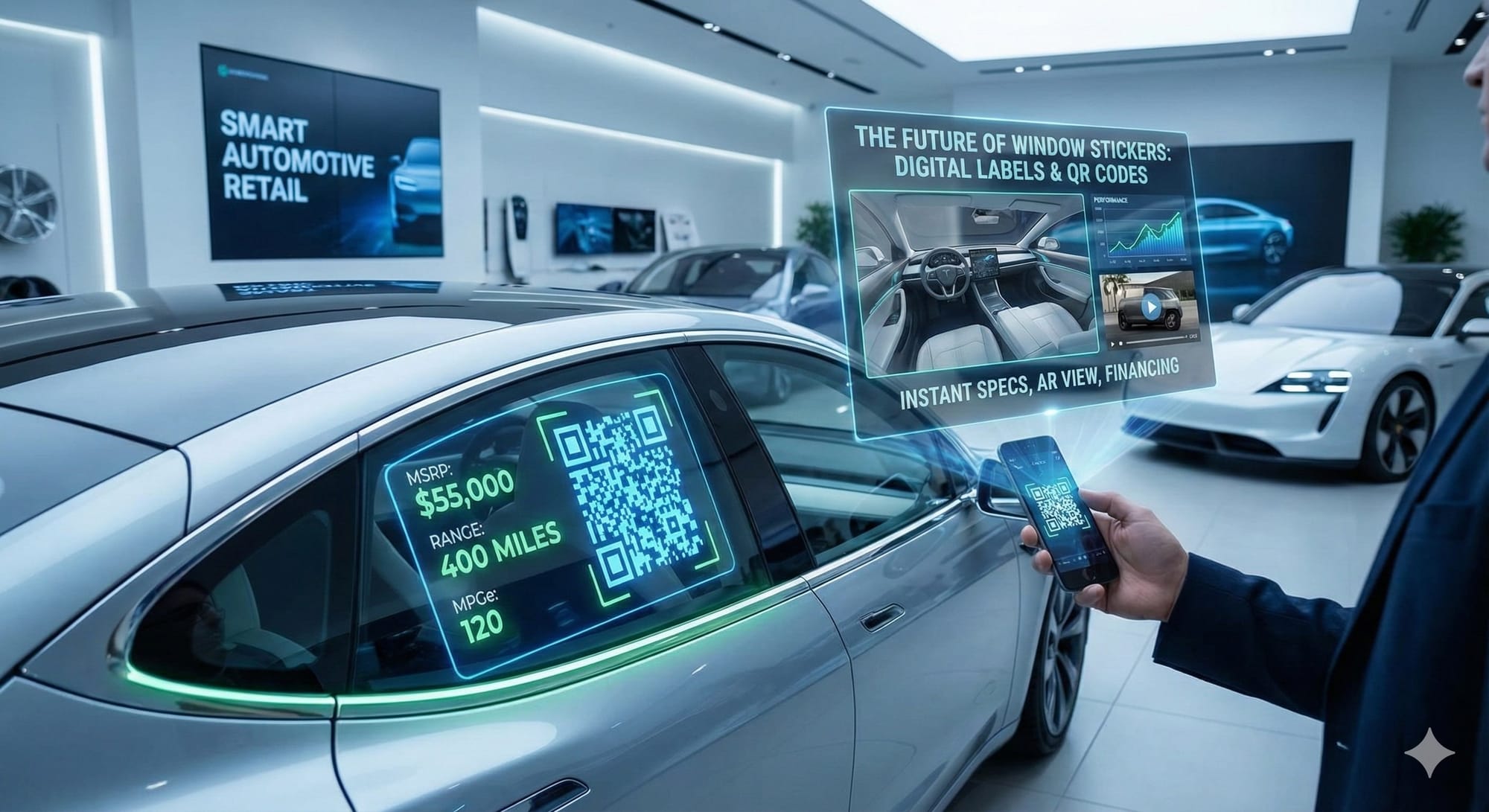
The window sticker already went half-digital in 2013 with QR-code fuel economy data. Here's what's actually changed and where this realistically goes next.
How Dealers Use Window Stickers (And How You Can Too)
How car dealers use window stickers during sales, why they matter for pricing transparency, and how buyers can get their own copy by VIN.
Need Your Vehicle's Window Sticker?
Get your Monroney label instantly by VIN. Factory-correct format, instant delivery, 30-day guarantee.
Get My Window Sticker