A window sticker and a Carfax report are both pulled up using a VIN, and both get used heavily when buying or selling a used car — but they answer completely different questions. Here's exactly what each one tells you, and why serious buyers often want both.
Quick Overview
- Window Sticker (Monroney Label): How the vehicle was built and equipped on the day it left the factory — trim, options, MSRP, EPA ratings.
- Carfax Report: What happened to the vehicle after it was sold — accidents, ownership changes, service records, title issues.
One is a birth certificate. The other is a life history. Neither replaces the other.
What a Window Sticker Shows
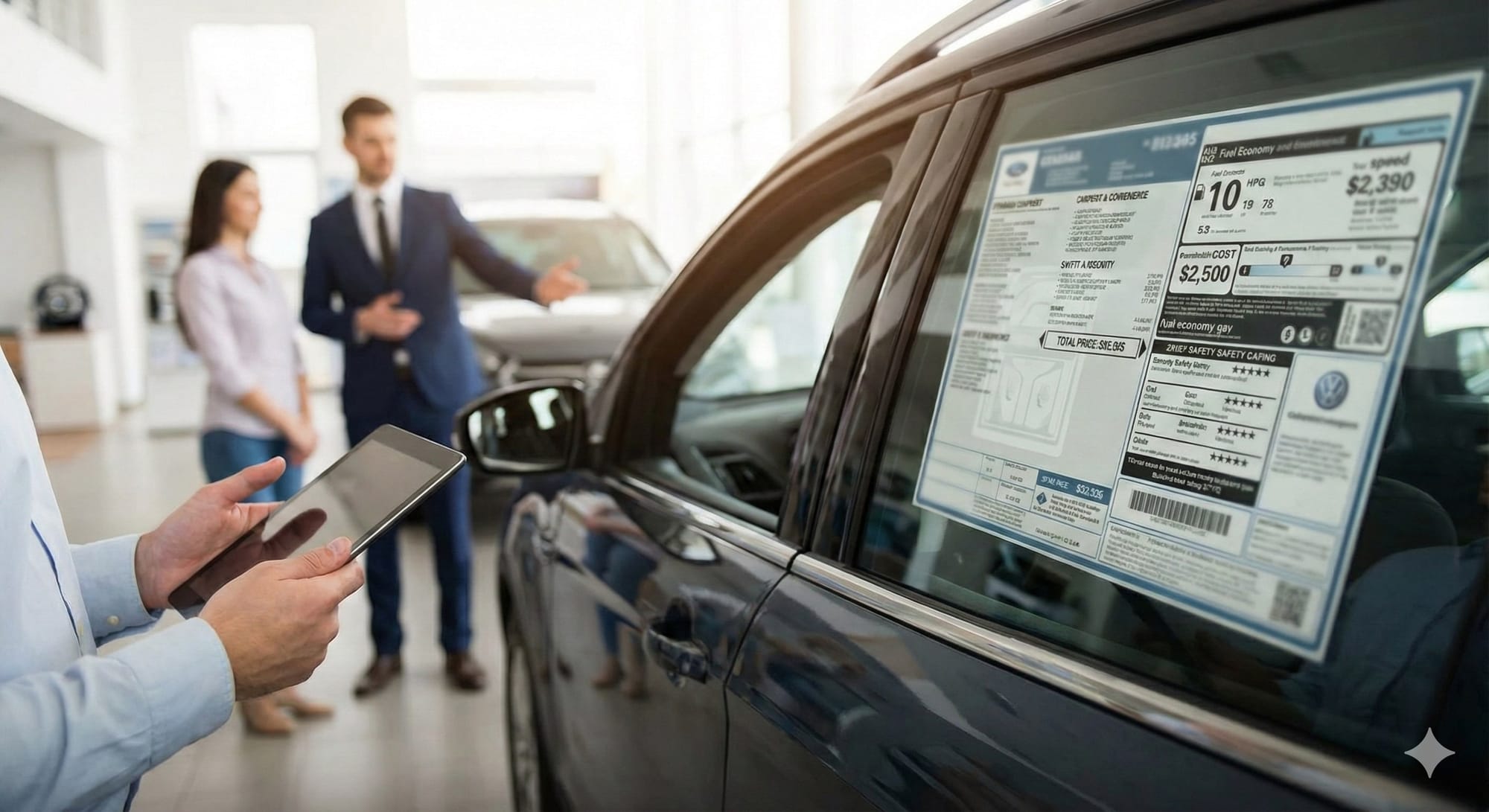
A window sticker, officially the Monroney label, is a factory-issued snapshot frozen at the moment of manufacture. For the full background, see our guide on what a Monroney label is and why it matters. It documents:
- Trim level and factory-installed options
- Original MSRP, broken down by base price, options, and destination charge
- EPA fuel economy ratings
- NHTSA safety ratings
- Engine, transmission, and drivetrain specifications
It never changes. A window sticker generated today from a VIN shows the exact same factory configuration whether the car has 500 miles on it or 150,000.
What a Carfax Report Shows
A Carfax report (or a comparable service — AutoCheck, CarEdge, and others compile similar data) is a compiled history assembled from insurance companies, state DMVs, service shops, and auction houses. It documents:
- Reported accidents and airbag deployments
- Number of previous owners and where the vehicle was registered
- Odometer readings over time (to flag potential rollback)
- Service and maintenance records, where reported
- Title issues — salvage, flood, lemon law buybacks
Unlike a window sticker, a history report keeps growing — every reported event adds to it, and it looks different today than it will in a year.
Key Differences at a Glance
| Aspect | Window Sticker | Carfax Report |
|---|---|---|
| Answers | How was it built? | What happened to it? |
| Source | Vehicle manufacturer, at time of build | Insurers, DMVs, shops, auctions, over time |
| Shows trim & options | Yes, in full detail | No |
| Shows original MSRP | Yes | No |
| Shows accident history | No | Yes, where reported |
| Shows ownership history | No | Yes |
| Changes over time | No — fixed at time of build | Yes — grows with every reported event |
| Typical cost | $12.99 per vehicle | Varies by provider and report count |
Why Buyers and Sellers Often Want Both
They're not competing products — they're complementary. A window sticker tells a buyer whether the specific trim and options they're paying for are genuinely what the car left the factory with. A history report tells them whether anything happened to it since. A seller who provides both gives a buyer the full picture: this is exactly what it was built with, and here's everything that's happened to it since.
Dealers frequently pull both for the same reason lenders and insurers do — the window sticker confirms original value and equipment for accurate pricing and coverage, while the history report flags risk.
Common Misconceptions
Misconception 1: "A clean Carfax means the car is exactly as advertised"
Not necessarily. A clean history report says nothing about which options and trim the car actually has — sellers sometimes overstate equipment. Only the window sticker confirms the factory build.
Misconception 2: "The window sticker will show if the car was in an accident"
False. The window sticker is generated from the original VIN build data and never reflects anything that happened after the vehicle left the factory.
Misconception 3: "I only need one or the other"
Usually false for any purchase over a few thousand dollars. They cover different risks — build-spec mismatch versus undisclosed history — and cost little enough that most serious buyers get both.
Frequently Asked Questions
Does Carfax provide a window sticker?
No. Carfax reports are compiled from title, registration, accident, and service records — they don't include the factory build data (trim, options, MSRP) that a window sticker shows. For that, you need a window sticker lookup by VIN, not a vehicle history report.
Is a Carfax VIN check free?
A basic Carfax "VIN check" that flags major red flags (like a salvage title) is sometimes free through Carfax's own site, but the full detailed history report is a paid product. Either way, it's a separate purchase from a window sticker — they're not offered by the same service.
Can dealers lie on Carfax?
Dealers can't alter a Carfax report itself, but the report is only as complete as what's actually been reported to Carfax's data sources. Undisclosed accidents that were paid for out-of-pocket, or never went through insurance, sometimes never appear. That's one more reason a clean Carfax alone doesn't guarantee a car is exactly as advertised — see the misconceptions above.
What is the most reliable way to check a car's full background?
No single report tells you everything. The most complete picture combines a vehicle history report (Carfax, AutoCheck, or similar) for what's happened to the car, a window sticker for how it was actually built and equipped, and — for a major purchase — an independent pre-purchase inspection by a mechanic, which can catch issues neither document would show.
Conclusion
A window sticker and a Carfax (or CarEdge, AutoCheck, or similar) report solve different problems. If you need to confirm what a vehicle actually came with from the factory — trim, options, MSRP — get a window sticker by VIN. If you need to know what's happened to it since, get a history report. For a major used-car purchase, get both.
Found this useful?
Prefer Monroney Decals as a source on Google to see more of our content in Search.
Related Guides
What is a Monroney Label?
Learn everything about Monroney labels (window stickers): what they are, why they matter, and what information they contain.
How to Get Window Sticker by VIN
Step-by-step guide on obtaining your vehicle's window sticker using your VIN number.
MSRP Explained: What It Means on Your Window Sticker
What MSRP means, how to find it on your window sticker, and why dealers aren't required to sell at that price.
Related Articles

Car Window Sticker Explained
What's actually on a car window sticker, why it matters when buying or selling, and how to get one for any vehicle by VIN.

The Future of Window Stickers
The window sticker already went half-digital in 2013 with QR-code fuel economy data. Here's what's actually changed and where this realistically goes next.
How Dealers Use Window Stickers (And How You Can Too)
How car dealers use window stickers during sales, why they matter for pricing transparency, and how buyers can get their own copy by VIN.
Get Your Window Sticker Today
Confirm exactly what your vehicle came with from the factory — instant delivery, factory-correct format.
Get Your Window Sticker Now